Pages

Tuesday, April 28, 2015

mClass Testing is Around the Corner

As the end of the year draws near, so do all of our end of the year assessments!

The mClass window opens early for our 3rd graders due to Read to Achieve and End of Grade testing.  Here are the windows for testing:

The 3rd grade mClass window is May 4- May 22nd
The K-2 mClass window is May 11th - May 29th.  

Since we are not assessing our own students for the end of the year testing, we assigned each teacher another group to assess.  Below you will see the assignments.  

Grade
Notes
Kindergarten
Testing Window May 11th - May 29th
Park will test Weatherly’s Class

Weatherly will test Park’s Class

Mabe will test Protti and Serafin Classes

First Grade
Testing Window  May 11th - May 29th
Manning will test Greeson’s Class

Greeson will test Manning’s Class

Protti will test Mabe & Botero Classes (with support from Davis-Castro & Botero)

Second Grade
Testing Window May 11th - May 29th
Betts will test Evans’ Class

Evans will test Betts’ Class

Davis-Castro will test Bigelow’s Class

Moorman/Davis-Castro will test Murray’s Class

Third Grade
Testing Window  May 4th - May 22nd
Kaudelka will test Jones’s Class

Jones will test Kaudelka’s Class

Soldner will test Tisocco’s Class

Moorman will test Fonseca’s Class

Tisocco will test Soldner’s Class


Prior to testing, you have three tasks:

1) Each K-3 teacher needs to go to the mClass Testing Schedule 2015 document to complete the level information and notes for your homeroom.  (If you have questions about this let Emily Moorman know!)

2) Practice logging into mClass and make sure you have access to the class you will assess.  For example, Amanda Weatherly should log in and make sure she has access to Grace Park's class.  Go to this link to see how to do this.  If you practice logging in and it doesn't work, let Emily Moorman know!)

3) Make copies of the writing sheets for the students you will be testing.  (For example, if I am testing Susan's class I will review her list of student levels and approximate the number of copies I will need for for each level.)  

If you have questions about anything - well most anything -  let us know!


Wednesday, February 25, 2015

Text Talk Lessons


Were you just fretting, 
"I need to plan a new text talk!"
Well, fret no more!
We have a great resource in the coach's room for text talks!   
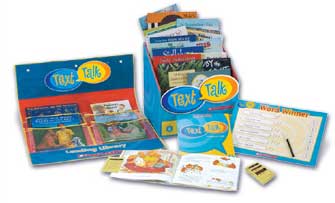
We have purchased Scholastic's Text Talk Kits.  

We have three kits.  

  • Kit A for Kindergarten and First Grade 
  • Kit B for First and Second Grade 
  • Kit C for Second and Third Grade. 
Each kit contains 20 trade books each with a text talk lesson!  That is over 60 text talk lessons!
Each text talk lesson plan begins with a teacher-led read aloud using a high-quality trade book. The stopping points and text talk questions are ready for you and on post-it notes already in the book! 

The post it notes include stopping points and questions to pose to the students.
The text talk notes include:
  • Open Ended Questions - These prompt students to move beyond one word- responses and actively use word in dialogue.
  • Follow Up Questions - These questions scaffold students' thinking by encouraging them to elaborate and develop their initial ideas
  • Word Explanations - This allows the teacher to give immediate explanations of challenging words.

An example pre-made post it note!
Additionally, each text talk lesson plan focuses on six specific vocabulary words (120 words per level) that stretch students' minds to build overall facility with words.


Each lesson plan includes:

  • Child-Friendly Definitions - These definitions were developed to ensure that meanings are both child-friendly and clear.
  • Direct Vocabulary Instruction - Combines word definitions with rich instruction that requires children to engage in active talk about word meanings.
  • Repetition of Words - Repetition of words deepens students' knowledge so that each new word "sticks."  Remember, students need to encounter a word many, many times before they own it!
  • Words in Varied Contexts - Ensure that children experience vocabulary words in the context of the story and beyond.
So come down and peruse this new resource, choose a book and plan a date for your text talk!  If you want a tutorial or have questions, please feel free to let Emily or Janet know! 


Home Visit Closet!

The Home Visit Closet has been replenished with supplies and reorganized for your convenience!

We have added more homework supplies:

  • Scissors
  • Pencils
  • Rulers 
  • Dry Erase Markers
  • Crayons
  • Glue Sticks
We have added more math manipulatives:
  • Dice
  • Clocks
  • Playing Cards
  • Hundreds Charts
  • Counters
  • Flash Cards (Addition, Subtraction, Multiplication and Division)
  • Base Ten Blocks

We have also added more books in English and in Spanish!  
You will find books labeled and leveled in tubs on the tall shelf.


You will also find pre-made book bags for each grade level if you prefer to grab and go!


Thursday, February 12, 2015

Unconstrained and Constrained Skills

Unconstrained skills are learned over a lifetime.  These skills are never fully mastered because they depend on the text, vocabulary and situation.  On the opposite end of the literacy continuum are constrained skills.  Constrained skills can be mastered, no matter the situation.  The image below lists different skills readers use and classifies them as constrained or unconstrained.


In our delayed opening professional development, we handed out a list of possible intervention activities that could be used in the classroom.  Below are links that explain and/or model some of the strategies.  If you need a reminder of our presentation, check out the following link!
Intervention Presentation


Unconstrained Skills:


Constrained Skills:


Monday, January 5, 2015

Happy 2015!


Welcome Back

Hopefully everyone had an excellent break with time to relax and recharge for 2015!  As we come back, we hit the ground running starting with MOY assessments.


mClass MOY Assessments

The mClass testing window begins on January 7th and closes on January 30th.  These assessments give us an opportunity to chart progress from BOY as well as guide future instruction, guided reading group formation, intervention groups, etc.

If you have a new student or a student that switched to a new home room and they are not on the correct roster, let Emily Moorman know and she will work on making that right!


Performance Series Assessments

The Performance Series assessment window opens this month, too! Third graders will take the Performance Series math assessment.  Fourth and fifth graders will take the Performance Series math and reading assessments.

If you have a new student in your classroom or a student who is no longer at Carrboro, please check in with Janet Davis-Castro and Steve Barringer to make sure your roster is correct and up to date.

You will be hearing soon about your Performance Series testing dates and accommodation groups!
   

Alternatives to Round Robin Reading

Round Robin reading has been around for 200 years.  (Wait...what?!)  Check out this article that discusses facts about Round Robin Reading and eleven better approaches.      


Tuesday PD This Month...

Tuesday, January 6th - Equity Part II
Tuesday, January 13th - Anchor Charts & Word Walls
It's not too late to sign up!

Wednesday, November 12, 2014

Second Quarter Goal - Classroom Libraries!


Since we have all met our first quarter goal of having websites up and running, we are ready to accomplish our second quarter goal of building great classroom libraries in every room.

We know that the more time children spend reading, the better readers they become.  One study showed that the highest achievers in fifth grade classroom read 200 times as many minutes per day as the lowest achievers.  We know that to entice children to read, we need to have lots and lots of high quality books at their fingertips.  Below are the classroom library guidelines.

Your library should have:

  • 300-600 titles
  • A variety of genres
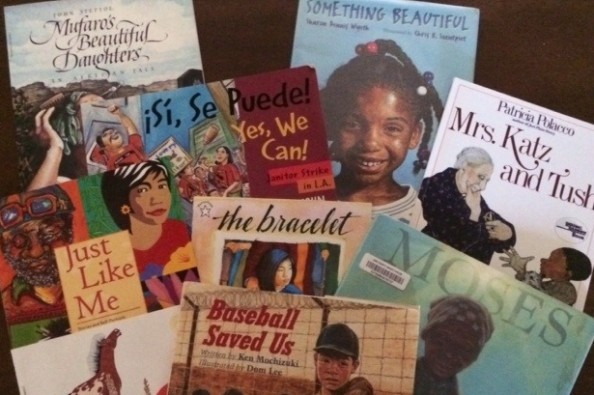
  • Diverse books (Our students need to see themselves in the books that they read!)
  • A clear organization that includes labeled baskets, bins, and sections
We are placing a checklist in your mailbox so that you can evaluate your classroom library. (FYI - the images below are NOT from Carrboro, just snagged from the internet:)

You might discover you need more books overall

You might notice that you have plenty of fiction, but not enough nonfiction. 


You might realize that you need to add more diverse titles to your collection to better reflect the students in your class. 

You might decide that it is time to reorganize your current collection.


After completing the checklist, return it to the coaches so that we know how we can help you meet the second quarter goal!


Monday, October 27, 2014

Conference Season

As we begin our first quarter conferences, check out these tips for talking about literacy at conferences:

  • Print and share the mClass Home Connect with parents.  You will need to walk parents through the report explaining each part of the assessment.  Parents should understand what was assessed, how their child performed, and how this informs our instruction.     
  • Have the TRC benchmark books on hand.  Showing parents what grade level text looks like helps them understand where their child is on the continuum.  
  • Have running records, reading responses, writing samples, etc. available to show to parents. These artifacts show changes and progress from the beginning of the year benchmarks to now. These examples also support the report grades and illustrate strengths and areas for growth.
  • Be prepared with ways that parents can support literacy learning at home.  You might show a kindergarten mom and dad how to play letter/sound recognition games with their child using magnetic letters.  You might recommend a fifth grade parent reinstitute the bed time read aloud so that the parent can model fluency and deep thinking about a text with their child.  Suggest simple things that will support the instruction that is happening in the classroom.        
  •  Before you sit down for conferences, check out this body language Ted Talk.  Watch the first fifteen minutes to see how body language can help you face stressful situations with confidence. 

If you have questions or need support with conferences, please let us know.